
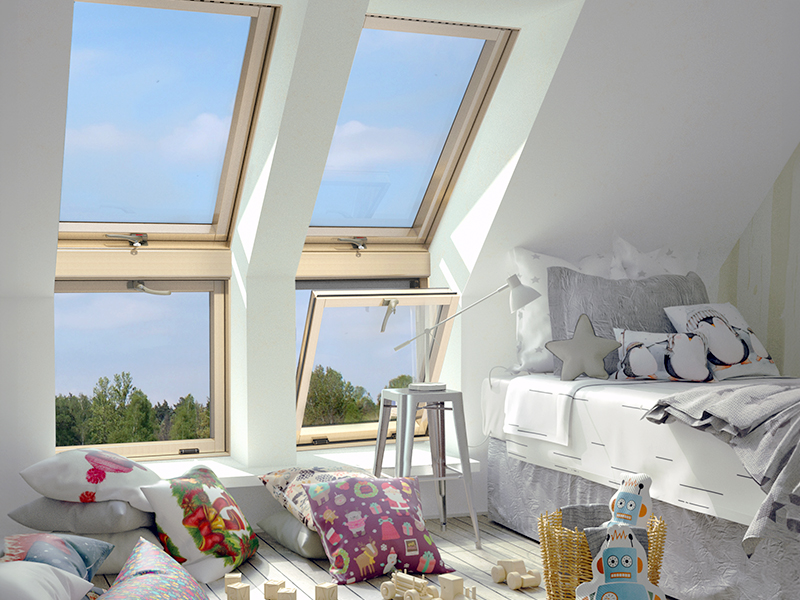
Łączenie okien dachowych – jak dobrze doświetlić poddasze?
Jedno okno na poddaszu to często za mało, by równomiernie doświetlić całe pomieszczenie. Dlatego powszechnie stosowanym i bardzo efektownym rozwiązaniem jest łączenie ze sobą kilku okien w zestawy (tzw. zespolenia). Pozwala ono na tworzenie rozległych przeszkleń, które zapewniają optymalny dopływ naturalnego światła i nadają wnętrzom nowoczesny charakter.
Przeczytaj, kiedy i ile okien warto ze sobą połączyć, jak dobrać modele do zestawu oraz o jakich zasadach montażowych musisz pamiętać!
Jedno duże czy kilka mniejszych okien dachowych?
Montaż kilku mniejszych okien zamiast jednego, bardzo dużego, to najlepszy sposób na optymalne doświetlenie poddasza użytkowego. Rozlokowanie okien w pewnych odstępach lub połączenie ich w pary sprawia, że światło lepiej rozprasza się w pomieszczeniu.
Warto pamiętać, że powierzchnia połączonych ze sobą okien powinna stanowić około 10-12% (1/8) powierzchni podłogi. Poprawnie rozmieszczona stolarka dachowa jest kluczowa nie tylko dla komfortu wzrokowego, ale również dla prawidłowej wentylacji oraz bilansu energetycznego całego budynku.
Łączenie okien dachowych – podstawowe zasady montażu
Poprawny montaż kilku połączonych ze sobą okien jest warunkiem bezproblemowego funkcjonowania poddasza. Decydując się na zespolenia, należy przestrzegać następujących reguł:
Kąt nachylenia: Zespolenia okien połaciowych można wykonywać na dachach o spadku od 15° do 90°.
Grubość ościeżnicy i materiał: Łączyć można wyłącznie okna o identycznej grubości ościeżnicy, wykonane z tego samego materiału (np. drewno z drewnem, PVC z PVC).
Łączenie w poziomie (obok siebie): Szerokość okien może się różnić, jednak ich wysokość musi być identyczna.
Łączenie w pionie (jedno nad drugim): Sytuacja jest odwrotna – okna muszą mieć taką samą szerokość, za to ich długość może być dowolna.
Kołnierze uszczelniające: Do łączenia niezbędne jest zastosowanie dedykowanych kołnierzy zespolonych (Kombi), które odprowadzają wodę opadową z połaci dachu.
Rolety zewnętrzne: Jeśli planujesz montaż rolet, decyzję musisz podjąć przed instalacją okien. W łączeniach pionowych należy zachować ok. 25 cm odstępu między oknami, aby zmieściła się kaseta rolety.
Uwaga: Większe przeszklenia poziome wymagają dopasowania do rozstawu krokwi. Wszelkie modyfikacje więźby (np. wycinanie krokwi pod szerokie okna) należy bezwzględnie skonsultować z konstruktorem lub doświadczonym dekarzem.
Sposoby na łączenie okien dachowych: układy i możliwości
Najpopularniejszym wariantem jest montaż okien obok siebie (bliźniaczy) lub jedno nad drugim. Na poddaszu możemy jednak tworzyć znacznie bardziej rozbudowane płaszczyzny:
Zestawienia schodkowe: Okna układane są asymetrycznie – w każdym rzędzie na dachu znajduje się inna liczba przeszkleń.
Zespalanie w kalenicy: Niezwykle efektowne rozwiązanie, w którym okna stykają się ze sobą w najwyższym punkcie dachu (kalenicy) i rozchodzą na przeciwległe połacie, wpuszczając mnóstwo światła zenitalnego.
Łączenie z oknami kolankowymi: Okna połaciowe łączy się z pionowymi oknami w ścianie kolankowej. To doskonałe przedłużenie widoku, polecane zwłaszcza do domów z dachem bez okapu.
Co ważne, pionowe łączenie okien (jedno nad drugim) jest technicznie łatwiejsze w realizacji, ponieważ nie wymusza drastycznych zmian w rozstawie krokwi dachowych, a pozwala uzyskać efekt pasma świetlnego na całej długości połaci.
Wybór okien dachowych do zestawu: jakie modele połączyć?
Najczęściej w zespoleniach wykorzystuje się okna obrotowe oraz uchylno-przesuwne. Można je jednak swobodnie uzupełniać o elementy nieotwierane (FIX).
Dachy bez ścianki kolankowej: Świetnie sprawdza się tu połączenie dolnego okna nieotwieranego (jako tzw. doświetla) z otwieranym oknem górnym. Ważna zasada: Jeśli górne elementy są nieotwierane, okna pod nimi muszą się otwierać, aby umożliwić swobodne umycie zewnętrznych szyb!
Wysokie salony i klatki schodowe: Często stosuje się tam pionowe łączenie dwóch okien o standardowej długości 140 cm. Górne okno znajduje się poza zasięgiem rąk, dlatego warto zadbać, by było to okno elektryczne (sterowane pilotem) lub obsługiwane za pomocą teleskopowego drążka.
W zestawach pionowych można też mieszać sposoby otwierania, np. okno obrotowe na górze z oknem o podwyższonej osi obrotu na dole, co ułatwia wyglądanie na zewnątrz.
Rozwiązania doświetlające do poddaszy nieużytkowych – Wyłazy OKPOL
Jeśli Twoje poddasze (lub strych) jest nieogrzewane, a zależy Ci na dostępie światła i wyjściu na dach, zamiast okien dachowych warto zastosować dedykowane wyłazy dachowe. W ofercie OKPOL znajdziesz modele dopasowane do różnych potrzeb, m.in.:
WVD 47×73 oraz WVM+ 47×57 – klasyczne wyłazy z drewna.
WVB+ V6 47×73 – uniwersalne wyłazy o podwyższonych parametrach.
WVR PVC V6 – dwuszybowy wyłaz z trwałego profilu PVC, odporny na wilgoć.
Kołnierz uszczelniający – fundament bezpiecznego zespolenia
Niezbędnym elementem montażowym jest kołnierz uszczelniający (tzw. kołnierz Kombi). Bez niego poprawne połączenie kilku okien byłoby fizycznie niemożliwe. To on tworzy szczelną barierę między stolarką a pokryciem dachowym, odprowadzając wodę i śnieg poza obszar przeszklenia, a także chroniąc przed wiatrem.
Na rynku dostępne są kołnierze z aluminiowej blachy powlekanej poliestrem, dedykowane do konkretnych rodzajów pokryć: płaskich (np. papa, gont), falistych (dachówka) czy wysokich tłoczeń. Dobór odpowiedniego kołnierza, idealnie dopasowanego do rodzaju i koloru dachu, to gwarancja szczelności zestawu na dekady.